What to Do in Akureyri: A Walking Guide to Iceland's Northern Capital
A local's walking guide to Akureyri, Iceland. Covers Akureyrarkirkja, the botanical garden, heart-shaped traffic lights, and the best of North Iceland.
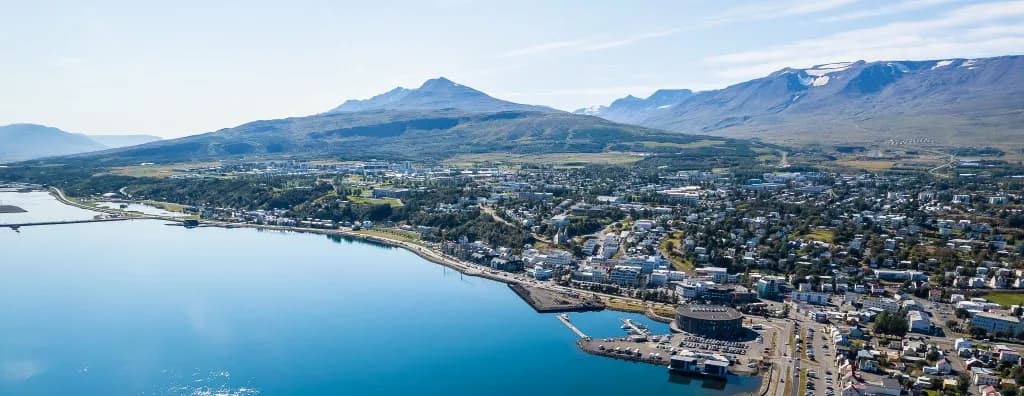
Most people who visit Iceland never leave the southwest corner. They do Reykjavik, the Golden Circle, maybe the South Coast, and fly home thinking they've seen Iceland. They haven't. Not really. The north is a completely different country, and Akureyri is where it starts.
Akureyri ("AH-koo-ray-ree") is Iceland's second largest city, which sounds impressive until you learn it has about 20,000 people. It sits at the end of Eyjafjörður, Iceland's longest fjord, surrounded by mountains that stay snow-capped well into summer. It's compact, walkable, and has a personality all its own.
I grew up in the south, but I've spent enough time up north to tell you this: Akureyri deserves more than a quick stop on a Ring Road drive. Give it at least half a day.
Getting There
Akureyri is about 5 hours north of Reykjavik on Route 1, or a 45-minute flight from the domestic airport. If you're driving the Ring Road, it's the natural midpoint. The town sits on the western shore of Eyjafjörður, protected from the worst weather, which is why it's surprisingly mild for a town just 100 km from the Arctic Circle.
The Walking Route
This route covers central Akureyri in about 2-3 hours. It's short on distance but long on character.
Start: Hof Cultural Center
Begin at Hof, the modern cultural center right on the waterfront. The building itself is striking. Glass and steel with a sloping green roof that mirrors the mountains behind it. Inside there's a concert hall, conference center, and tourist information where you can grab a free map.
From Hof, look out across the fjord. On clear days, the mountains on the eastern shore are reflected perfectly in the water. This is one of those views that makes you stop talking for a minute.
Hafnarstræti (Harbor Street)
Walk south along Hafnarstræti, the main street running parallel to the harbor. This is where Akureyri does its daily life. Cafes, bookshops, a few clothing stores, and the kind of small businesses that only exist in towns where everyone knows each other.
Stop at one of the cafes for coffee. Blaberber Cafe is excellent. Akureyri takes its coffee seriously, same as the rest of Iceland.
And here's the thing you'll notice at every intersection: the traffic lights have heart-shaped red lights. This started in 2008 during the financial crisis as a way to spread positivity. The town decided to keep them permanently. It's a small thing, but it's very Akureyri. Optimistic, a little quirky, completely sincere.
Akureyrarkirkja
Walk uphill from Hafnarstræti and you can't miss Akureyrarkirkja, the church that dominates the town's skyline. Designed by Guðjón Samúelsson (the same architect behind Hallgrímskirkja in Reykjavik), it sits at the top of a long staircase with a view over the fjord.
Inside, look up. There's a stained glass window above the choir with an interesting backstory. In 1942, two Icelandic brothers, Helgi and Kristján Zoëga, bought stained glass panels from an antique dealer in London who told them the glass came from Coventry Cathedral, which had been bombed in the war. For 70 years everyone believed it. Bonds formed between Akureyrarkirkja and the new Coventry Cathedral. Then in 2014, researchers concluded the glass almost certainly came from a different English church. Nobody knows which one. The mystery makes it better, if you ask me.
The church was consecrated in 1940. It's smaller and warmer than Hallgrímskirkja, and I think it might actually be more beautiful. Don't tell anyone in Reykjavik I said that.
Sigurhæðir (Matthías Jochumsson House)
A short walk from the church brings you to Sigurhæðir, the preserved home of Matthías Jochumsson, who wrote Iceland's national anthem, "Lofsöngur" ("Hymn"), in 1874. The house is a small wooden building, typical of 19th-century Akureyri, and it's been kept much as it was when he lived there.
Jochumsson was a poet, playwright, and translator. He translated several of Shakespeare's plays into Icelandic, which is no small feat when you consider how different the two languages are. The house gives you a window into what intellectual life looked like in a tiny northern Icelandic town 150 years ago.
Lystigardurinn (The Botanical Garden)
Follow the residential streets south to Lystigardurinn ("LISS-tee-garth-ur-inn"), the Akureyri Botanical Garden. This is one of the northernmost botanical gardens in the world, and it's free to enter.
What makes it remarkable is how much grows here. The garden has almost every native Icelandic plant species, plus an extensive international collection. Roses, lilies, and blue poppies thrive here despite being just south of the Arctic Circle. The sheltered position in the fjord and the long summer daylight create a microclimate that plants love.
The garden was founded in 1912 by a local women's association, and it's been tended by volunteers and gardeners ever since. It's peaceful, beautifully maintained, and the kind of place where you sit on a bench and lose half an hour without noticing.
Nonnahús
On your way back toward the center, stop at Nonnahús, the childhood home of Jón Sveinsson (known as "Nonni"), who became one of Iceland's most beloved children's book authors. He wrote the Nonni stories, which have been translated into around 40 languages.
The little wooden house dates from 1850 and has been turned into a small museum. Even if you've never read the books, the house itself is a charming example of how people lived in Akureyri in the mid-19th century. Low ceilings, small rooms, thick walls against the cold.
Beyond the Town
Akureyri is also the gateway to some of North Iceland's best attractions. If you have extra days, these are within easy reach.
Goðafoss: The "Waterfall of the Gods" is about 45 minutes east. In the year 1000, when Iceland officially converted to Christianity, the lawspeaker Thorgeir Ljosvetningagodi threw his statues of the Norse gods into this waterfall. That's the legend, anyway, and it gave the falls their name.
Mývatn: About an hour east, Lake Mývatn is a geothermal wonderland. Volcanic craters, bubbling mud pools, lava formations, and the Mývatn Nature Baths, which are like the Blue Lagoon but quieter, cheaper, and surrounded by volcanic landscape instead of a parking lot.
Whale watching: Akureyri and nearby Húsavík are two of the best places in Iceland for whale watching. Humpback whales are common in Eyjafjörður, and you can sometimes spot them from shore.
Practical Tips
When to visit: June through August for the best weather and the botanical garden in full bloom. The midnight sun is surreal up here. In late June, it barely gets dark at all.
Getting around: The town center is entirely walkable. Everything in this guide is within a 20-minute walk.
Where to eat: Rub23 for seafood, Strikid for views over the fjord, or Akureyri Fish and Chips for something quick and reliable.
The swimming pool: If you do one thing the locals do, go to Sundlaug Akureyrar. It has hot tubs, a water slide, and that unmistakable Icelandic swimming pool culture where strangers chat in the hot pots like old friends.
Give It More Than a Gas Stop
Too many people treat Akureyri as a pit stop on the Ring Road. Fill up, grab a hot dog, keep driving. That's a mistake. This town has more character per square meter than most cities ten times its size. The heart-shaped lights, the mystery window, the poet's tiny house. It all adds up to something worth your time.
If you want the full walking tour with stories and history, we have that on the Iceland Local app. But even without it, just walk around for a couple hours. Akureyri has a way of growing on you.
Explore Iceland with a Local Guide
Download the app for GPS-triggered audio tours narrated by a real Icelander. Eyes up, phone down.
More from the blog
Apr 9, 2026
Golden Circle or South Coast? How to Choose Your Iceland Day Trip
Golden Circle vs South Coast Iceland: which day trip is better? An honest comparison covering what each offers, best season, and how to choose.
Apr 9, 2026
Hallgrímskirkja: The Story Behind Reykjavik's Iconic Church
The full story of Hallgrímskirkja, Reykjavik's iconic church. Architecture, history, the tower view, pipe organ, and tips for visiting from a local.