Hallgrímskirkja: The Story Behind Reykjavik's Iconic Church
The full story of Hallgrímskirkja, Reykjavik's iconic church. Architecture, history, the tower view, pipe organ, and tips for visiting from a local.
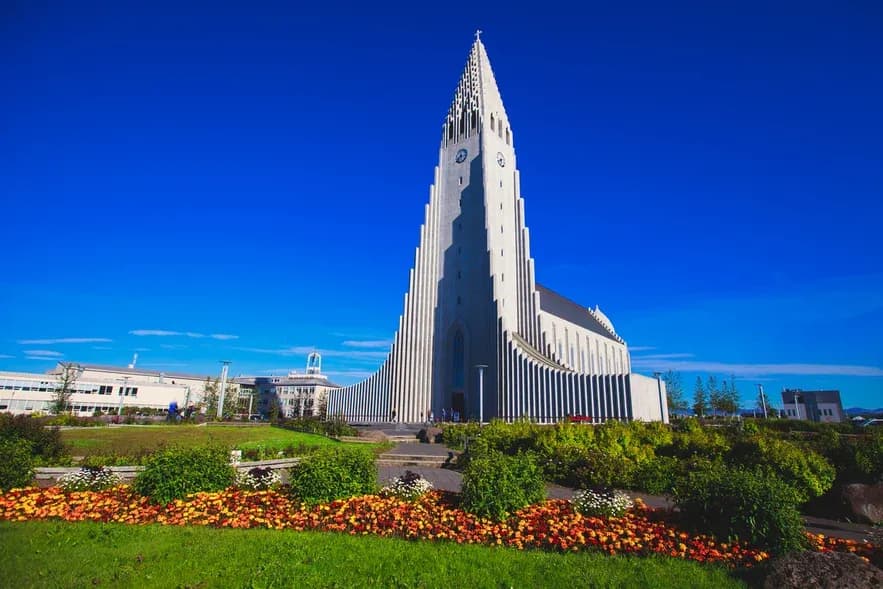
You can see Hallgrímskirkja from almost anywhere in Reykjavik. It's the tallest building in the city, 74.5 meters of concrete reaching up from the top of a hill like a monument that the city was built around. Which, in a way, it was. If you've seen a single photo of Reykjavik, this church was in it.
But most visitors walk up, take a photo, and walk away. They're missing the best parts. The building has a story that took 49 years to complete, a pipe organ that weighs 25 tons, and a tower view that is genuinely the best in the country's capital. Let me fill you in.
The Architecture
Hallgrímskirkja was designed by Guðjón Samúelsson, Iceland's state architect, in 1937. He was inspired by the basalt column formations you see at places like Svartifoss waterfall and Reynisfjara beach. Look at the church from the front and you'll see it. The columns flanking the central tower fan outward like the basalt columns do in nature, narrowing as they reach the top.
It's Expressionist architecture with an Icelandic accent. The concrete facade has a rough, almost geological texture. When it catches the late afternoon light, especially in winter, the whole thing seems to glow. It doesn't look like any other church in the world, and that's the point. Samúelsson wanted a building that could only exist in Iceland.
Here's the thing that surprises people: it wasn't finished until 1986. Forty-nine years from design to completion. Construction started in 1945, the crypt was consecrated in 1948, the tower and side wings were finished by 1974, and the nave was finally consecrated in 1986. Icelanders sometimes joke that the construction timeline was almost as long as the sagas.
The church is named after Hallgrímur Pétursson, a 17th-century poet and clergyman who wrote the Passíusálmar (Passion Hymns), 50 hymns about the suffering of Christ that are still read on Icelandic radio during Lent every year. He never saw the church, obviously. He died in 1674. But his poetry is deeply embedded in Icelandic culture.
The Tower
Go up the tower. I'm not asking. I'm telling you.
You take an elevator to the observation deck at about 73 meters, and the view from up there is a complete 360-degree panorama of Reykjavik and its surroundings. The colorful corrugated iron rooftops spread out below you in a patchwork of reds, greens, blues, and yellows. Beyond the city, you can see Faxaflói bay, Mount Esja to the north, and on a clear day, the white cap of Snæfellsjökull glacier to the west, about 120 km away.
The tower costs a small entrance fee (around 1,500 ISK as of writing). The elevator ride takes about 30 seconds. The line can get long in summer, especially between 11 AM and 3 PM, so time your visit for morning or late afternoon.
Pro tip: The tower is one of the best spots in Reykjavik to photograph the city. Wide-angle lens, morning light, colorful rooftops below. If you're here in winter, the low golden light of midday is perfect.
The Pipe Organ
Inside the church, look up and back. The pipe organ built by the German organ builder Johannes Klais of Bonn is massive. It's 15 meters tall, weighs 25 tons, and has 5,275 pipes. It was installed in 1992, making it one of the newer additions to the church.
The sound in the nave is incredible. The concrete walls and high ceiling create acoustics that organ music seems to have been invented for. If you can time your visit to a concert or a Sunday service, do it. Hearing that instrument in this space is a different experience from seeing it silently.
Regular concerts are held, especially in summer. Check the church's website for schedules.
Leifur Eriksson Statue
In front of the church stands a statue of Leifur Eriksson (Leif Erikson), the Norse explorer who sailed to North America around the year 1000, roughly 500 years before Columbus. He's facing west, toward Vinland, the land he explored.
The statue was a gift from the United States to Iceland in 1930, commemorating the 1,000th anniversary of the Althingi, Iceland's parliament. The sculptor was Alexander Stirling Calder, father of the famous mobile artist Alexander Calder.
An American gift of a Viking explorer, standing in front of an Icelandic church that looks like volcanic rock. It's a nice collision of cultures.
Visiting Tips
Hours: The church is open daily. In summer (roughly June through August), hours are typically 9 AM to 9 PM. In winter, hours are shorter. Check the official site for exact times.
Tower hours: The tower opens slightly later and closes earlier than the church. Last entry is usually 30 minutes before closing.
Services: Regular Lutheran services are held on Sundays at 11 AM. You're welcome to attend even as a visitor. The services are in Icelandic, but the music and the atmosphere transcend language.
Best time to visit: Early morning for the tower (shorter line) and afternoon for the interior, when the light comes through the windows. If you want photos of the exterior, late afternoon light in summer or the golden midday light in winter.
Free vs. paid: Entering the church is free. The tower has an entrance fee. Concerts have separate ticket prices.
How long to spend: 20 minutes if you just walk through the nave. 45 minutes to an hour if you go up the tower and take your time.
The Neighborhood
Hallgrímskirkja sits at the top of Skólavörðustígur, one of the most photographed streets in Reykjavik. Walking down this street from the church gives you a straight shot to the city center, passing Icelandic design shops, wool stores, and cafes along the way.
The surrounding Þingholt neighborhood is one of the oldest residential areas in Reykjavik, with colorful houses, quiet streets, and that distinctly Icelandic mix of cozy and windswept.
Don't Just Take the Photo
Most people spend about five minutes here. They walk up, take a photo with the church in the background, and leave. I get it, it's a busy trip. But Hallgrímskirkja rewards you if you slow down. Go inside. Go up the tower. Read about the poet it's named after. Look at the Calder statue and think about the fact that an American sculptor made a Viking for Iceland.
If you're doing the Reykjavík walking tour on the Iceland Local app, Hallgrímskirkja is the first stop and you'll hear the full story through your headphones while you're standing right there. But even without the app, just give this building more than five minutes. It earned those 49 years of construction.
Explore Iceland with a Local Guide
Download the app for GPS-triggered audio tours narrated by a real Icelander. Eyes up, phone down.
More from the blog
Apr 9, 2026
Golden Circle or South Coast? How to Choose Your Iceland Day Trip
Golden Circle vs South Coast Iceland: which day trip is better? An honest comparison covering what each offers, best season, and how to choose.
Apr 9, 2026
Reynisfjara Black Sand Beach: What to Know Before You Go
Everything you need to know about Reynisfjara black sand beach in Iceland. Safety tips, the troll legend, basalt columns, puffins, and how to visit safely.