South Coast Iceland: The Complete Self-Drive Guide
Drive Iceland's South Coast from Reykjavik to Vik in one day. A local's guide to Seljalandsfoss, Skogafoss, Reynisfjara, and everything in between.
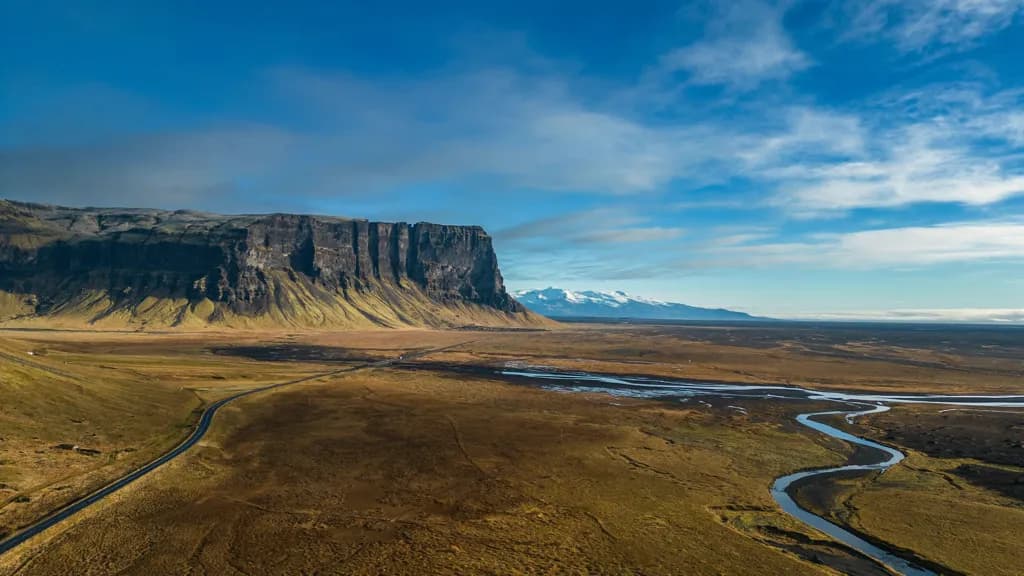
The South Coast of Iceland is, in my honest opinion, the most visually dramatic day trip you can do from Reykjavik. The Golden Circle gets more visitors, but the South Coast has waterfalls, glaciers, black sand beaches, and sea stacks all packed into a single stretch of Route 1. It hits different.
I've driven this route dozens of times and it never gets old. The landscape changes every twenty minutes. You go from green farmland to glacial rivers to volcanic desert to a beach that looks like it belongs on another planet. Here's how to do it right.
The Route Overview
Distance: About 360 km round trip from Reykjavik to Vik and back Driving time: Around 4.5 hours without stops Total day: 10-12 hours with all the stops Road: Route 1 (the Ring Road), fully paved and well-maintained Best time: June through September for the longest daylight, but winter has its own moody beauty
You'll head east from Reykjavik on Route 1. The first major stop is about 2 hours out, so grab coffee before you leave. Trust me on this.
Seljalandsfoss
The first waterfall. You'll see it from the road, a 60-meter curtain of water pouring off a cliff into a pool below. What makes Seljalandsfoss special is that you can walk behind it. There's a path that loops around the back of the falls, and standing there with water thundering in front of you and rock behind you is genuinely surreal.
Bring a waterproof jacket. You will get soaked. This is not a maybe. The spray is constant and heavy, especially on windy days.
While you're here, walk about 10 minutes south along the cliff face to find Gljufrabui ("GLYOO-vra-boo-ee"), a hidden waterfall tucked inside a narrow canyon. You have to wade through a shallow stream to get in, and the falls are completely concealed until you're standing right underneath them. Most people drive away without knowing it exists.
Time needed: 30-45 minutes for both waterfalls.
Skogafoss
Thirty minutes further east, Skogafoss is the muscular counterpart to Seljalandsfoss. It's 25 meters wide and drops 60 meters with so much force that the mist cloud it creates is visible from the road.
You can't walk behind this one. But you can climb the 527 steps to the top (yes, I've counted) for a view that stretches all the way to the coast. Up there, you're looking down on the falls and out across the flat black sand plains toward the ocean. On sunny days, the mist below creates a double rainbow. Not making that up.
Legend has it that the first Viking settler in the area, Þrasi Þórólfsson, hid a chest of gold behind the waterfall. Several people have searched for it. Nobody's found it. Yet.
Time needed: 30-45 minutes, longer if you climb the stairs.
Sólheimajökull Glacier
About 10 minutes past Skogafoss, a signed turnoff leads to Sólheimajökull ("SOLE-hay-ma-yo-kutl"), an outlet glacier of the massive Mýrdalsjökull ice cap. The access road ends at a parking lot, and from there it's a 15-minute walk to the glacier's edge.
The glacier is streaked with black volcanic ash from eruptions. The contrast between white ice and black ash is striking, and the blue crevasses deeper in the glacier are impossibly vivid. You can see how much the glacier has retreated by looking at the exposed rock and the growing lagoon at its base. Twenty years ago, the ice was hundreds of meters further forward.
You can look from the viewpoint for free, or book a guided glacier hike if you want to walk on the ice. The hikes require crampons and a guide. Don't try to walk onto the glacier alone. Crevasses are real and they can be hidden under snow.
Time needed: 30 minutes for the viewpoint, 3-4 hours for a glacier hike.
Reynisfjara Black Sand Beach
This is the stop that makes everyone's jaw drop. Reynisfjara is a black sand beach framed by towering basalt columns on one side and the Reynisdrangar sea stacks rising from the ocean on the other. The sand is jet black, ground down from volcanic rock over thousands of years.
The basalt columns look like they were carved by hand, but they're entirely natural. They formed as lava cooled slowly and contracted into hexagonal shapes. You can sit on them like steps, and the columns at Reynisfjara are some of the most photogenic in the world.
Safety warning, and I'm serious about this: The waves at Reynisfjara are extremely dangerous. Sneaker waves come in much further than you expect, and the undertow can pull you out in seconds. People have died here. Do not turn your back on the ocean. Do not walk near the waterline. Stay well above the wet sand line. The signs are there for a reason.
According to Icelandic legend, the Reynisdrangar sea stacks are two trolls who were trying to drag a ship to shore and were caught by the sunrise. The sun turned them to stone. That's the official story and I'm sticking with it.
Time needed: 30-45 minutes.
Dyrhólaey
Just west of Reynisfjara, the Dyrhólaey promontory is a massive rock arch jutting out into the sea. The name means "door hill island" because there's a hole in the rock big enough for a boat to sail through. From the top, you get panoramic views of the black sand coastline stretching in both directions, the Mýrdalsjökull glacier to the north, and on clear days you can see all the way to the Westman Islands.
Between May and August, puffins nest on the cliffs here. The road to the upper viewpoint closes during nesting season, but you can still access the lower area.
Time needed: 20-30 minutes.
Vik (Vík í Mýrdal)
The village of Vik is the turnaround point for most South Coast day trips. It's tiny, with a population of about 600, but it has a gas station, a couple of restaurants, and a wool shop that's been there forever. Fill up your tank here for the drive back.
If you have time, walk up to the Víkurkirkja church above the village. The view from there is classic Iceland. A white church on a green hill with the ocean and black sand below.
Fun fact: Vik sits in the shadow of Katla, one of Iceland's most active volcanoes. It hasn't erupted since 1918, so it's overdue. The locals have evacuation plans. They're very calm about it.
Driving Tips
Leave early. Like, 7 or 8 AM early. You have a lot of ground to cover and every stop deserves proper time. Rushing this route is a waste.
Check road.is before you go. In winter, Route 1 can be affected by storms, wind, or ice. The website gives real-time conditions. Also check vedur.is for weather forecasts.
Fuel up in Selfoss or Hvolsvöllur. These are the last reliable fuel stops before the more remote stretch.
Wind. When I say the wind in South Iceland can be strong, I mean it can rip your car door out of your hands. Hold onto doors when opening them, especially near Reynisfjara and Dyrhólaey. Rental car companies charge for door damage, and it happens more than you'd think.
What to bring: Layers, waterproof outer shell, sturdy shoes, snacks, water, and a camera with a lot of storage. Sunglasses help with the glare off the black sand.
That's the Route
The South Coast is one of those drives where you keep saying "okay, that's the best thing I've ever seen" and then the next stop tops it. Leave early, take your time, and don't try to rush it.
If you want the stories behind what you're seeing (why the sand is black, where the trolls came from, what's happening to the glacier), my girlfriend and I made an audio guide app called Iceland Local that narrates the whole route as you drive. But even without it, this is probably going to be the best day of your trip.
Explore Iceland with a Local Guide
Download the app for GPS-triggered audio tours narrated by a real Icelander. Eyes up, phone down.
More from the blog
Apr 9, 2026
Golden Circle or South Coast? How to Choose Your Iceland Day Trip
Golden Circle vs South Coast Iceland: which day trip is better? An honest comparison covering what each offers, best season, and how to choose.
Apr 9, 2026
Hallgrímskirkja: The Story Behind Reykjavik's Iconic Church
The full story of Hallgrímskirkja, Reykjavik's iconic church. Architecture, history, the tower view, pipe organ, and tips for visiting from a local.