Best Walking Route in Reykjavík - A Local's Guide
Discover the best self-guided walking tour in Reykjavík. This local's guide covers the Þingholtin route past Hallgrímskirkja, Tjörnin, and Harpa, with tips on timing, weather, and what most tourists miss.
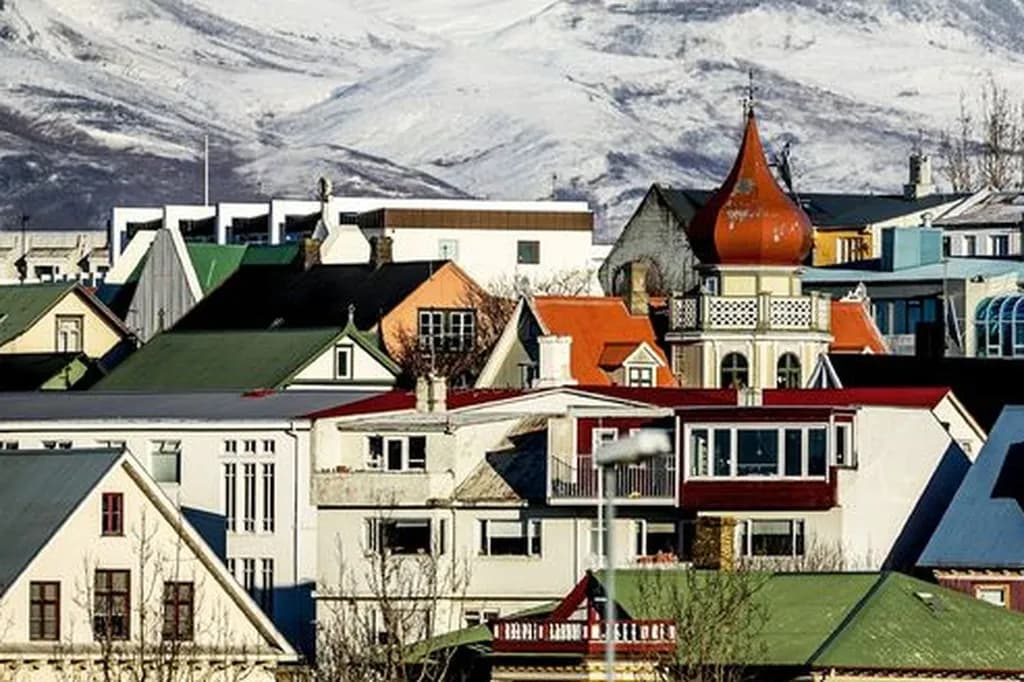
If you only have a few hours in Reykjavík, you need a route that covers the best of the city without wasting time backtracking. I've walked this city thousands of times, and the Þingholtin route is the one I take when friends visit from abroad.
It hits the major landmarks, but more importantly, it takes you through the neighborhoods where Reykjavík actually lives. The quiet residential streets with corrugated iron houses painted in every color, the bakeries where locals grab their morning kleinur, and the viewpoints that most visitors walk right past.
The Route at a Glance
Distance: About 3.5 km (2.2 miles) Time: 90 minutes to 2 hours, depending on how often you stop Difficulty: Easy, mostly flat with one gentle hill Best time: Morning, between 9 and 11 AM
You'll start at Hallgrímskirkja and end at Harpa concert hall by the harbor. It's downhill most of the way, which is a nice bonus.
Stop 1: Hallgrímskirkja
Start at the top. Hallgrímskirkja is the church you've seen in every photo of Reykjavík. The tall concrete one that looks like a basalt column rocket ship. Architect Guðjón Samúelsson designed it in 1937, inspired by the basalt lava formations at Svartifoss waterfall, but it wasn't finished until 1986. Icelanders are patient builders.
Local tip: If you want to go up the tower, do it first thing in the morning. The line gets long by midday, and the view from the top is genuinely worth it. You can see the entire city, the mountains behind it, and on a clear day, Snæfellsjökull glacier to the west.
Stand in front of the church and look at the statue of Leifur Eiríksson. He's facing west, toward the land he sailed to around the year 1000, about 500 years before Columbus. The statue was actually a gift from the United States in 1930.
Stop 2: Skólavörðustígur
Walk down Skólavörðustígur, the street that leads directly away from the church. This is one of the most photographed streets in Iceland, because it frames the church perfectly against the sky.
But slow down. The shops along here are worth a look. You'll pass Icelandic design studios, wool shops selling lopapeysa sweaters, and a few galleries. This isn't tourist-trap territory. Many of these are genuine local businesses.
About halfway down, the street opens up and you'll see the colorful rooftops of central Reykjavík spreading out below you. This is one of my favorite views in the city, and it costs nothing.
Stop 3: Þingholtin Neighborhood
Turn right at Bergstaðastræti and you're in Þingholtin, one of the oldest residential neighborhoods in Reykjavík. The name means "Parliament Hill". The Icelandic parliament briefly met nearby in the 1800s.
This is where the walking gets interesting. The houses here date back to the early 1900s, many built from corrugated iron because it was cheap to import and handled the weather well. They're painted in deep reds, ocean blues, and forest greens. Some are tiny. Reykjavík was a small town for most of its history.
What to notice: Look at the gardens. Even in a city this far north, people grow rhubarb, potatoes, and sometimes even roses. The geothermal heating keeps the ground warm enough, and Icelanders are stubborn gardeners.
Stop 4: Tjörnin (The Pond)
Follow the streets downhill until you reach Tjörnin, the pond in the center of the city. This is where Reykjavík breathes. Locals walk their dogs here, kids feed the ducks (there are around 40 species of birds at various times of year), and in winter people sometimes ice skate on it when it freezes over.
Walk along the eastern shore for the best view. You'll see Ráðhúsið (City Hall) sitting right on the water, and across the pond, the free church Fríkirkjan with its green roof.
Timing note: If you're here in June, the arctic terns nest near the pond and they will dive-bomb your head if you get too close. They're protecting their eggs. Just walk calmly and they'll leave you alone. Mostly.
Stop 5: Austurvöllur and Alþingi
From the pond, walk east to Austurvöllur square. This small green square is the social heart of Reykjavík. In summer, people sit on the grass with takeaway coffee. In winter, this is where the Christmas tree stands and where protests happen when Icelanders get fired up about something (which happens more often than you'd think).
The building with the dark basalt facade is Alþingi, the Icelandic parliament. Founded in 930 AD at Þingvellir, it's one of the oldest parliamentary institutions in the world. The current building is from 1881, and it's deliberately modest. No grand columns or golden domes. That's very Icelandic.
Stop 6: Laugavegur
Walk through to Laugavegur, the main shopping and café street. The name means "Wash Road". Back in the day, people walked this route to the hot springs to do their laundry. Now it's where you'll find the best coffee in Iceland, bookshops, record stores, and more wool sweaters than you can imagine.
Coffee stop: Reykjavík Roasters or Kaffi Vínyl are both solid choices. Icelanders drink more coffee per capita than almost anyone in the world, and the quality here reflects that.
Stop 7: Harpa Concert Hall
End your walk at Harpa, the stunning concert hall on the waterfront. The building is covered in geometric glass panels designed by artist Ólafur Elíasson, and they catch the light differently every hour of the day.
From Harpa, you can see Mount Esja across the bay, the old harbor where whale watching boats depart, and on lucky days, the northern lights in winter.
Practical Tips
What to wear: Layers. Always layers. Reykjavík weather changes every 20 minutes and that's not an exaggeration. A wind-and-waterproof outer layer, a warm mid-layer, and a base layer will cover you for any season. Good walking shoes too, the sidewalks can be uneven in older neighborhoods.
When to go: The route works year-round, but I prefer autumn mornings when the air is crisp and the tourist crowds have thinned. Summer gives you endless daylight. Winter gives you a moody, atmospheric city and the possibility of northern lights.
What to bring: A camera, obviously. But also headphones. If you want the full story behind each stop, the stories that make these buildings and streets come alive, there's an audio guide that tells you everything a local would tell you, narrated by an actual Icelander who grew up walking these streets.
Walk with a Local Voice in Your Ear
This route is even better when you hear the stories behind every stop. The Iceland Local app has a GPS-triggered audio tour of Þingholtin. Your phone stays in your pocket, and as you walk, you'll hear a real Icelander share the history, the legends, and the insider tips that bring Reykjavík to life. No tour group. No schedule. Just you, the city, and a local voice guiding you through it.
Explore Iceland with a Local Guide
Download the app for GPS-triggered audio tours narrated by a real Icelander. Eyes up, phone down.
More from the blog
Apr 9, 2026
Golden Circle or South Coast? How to Choose Your Iceland Day Trip
Golden Circle vs South Coast Iceland: which day trip is better? An honest comparison covering what each offers, best season, and how to choose.
Apr 9, 2026
Hallgrímskirkja: The Story Behind Reykjavik's Iconic Church
The full story of Hallgrímskirkja, Reykjavik's iconic church. Architecture, history, the tower view, pipe organ, and tips for visiting from a local.